How We Make Games: From Idea to Playable in Your Browser
Indie game development at HulaGames, step by step: detailed specs, early playable builds, phone tests, simulated playtests, art direction and shared points.
Indie game development looks glamorous from the outside and mostly consists of decisions. Which game? Which rules? How big is a button? What happens when a player taps twice? At HulaGames, an independent studio in San Diego, we’ve built a process that turns those decisions into games you can open from a link and play on your phone.
Here’s how it works, from the first idea to a game running in your browser, with real examples from the games we’ve shipped and the ones we’re building.
Step 1: Start with a reason the game should exist
Every game starts with a short case for itself. Does it suit a phone? Can someone learn it in one sentence? Is a session short enough for a coffee break, but deep enough to come back to?
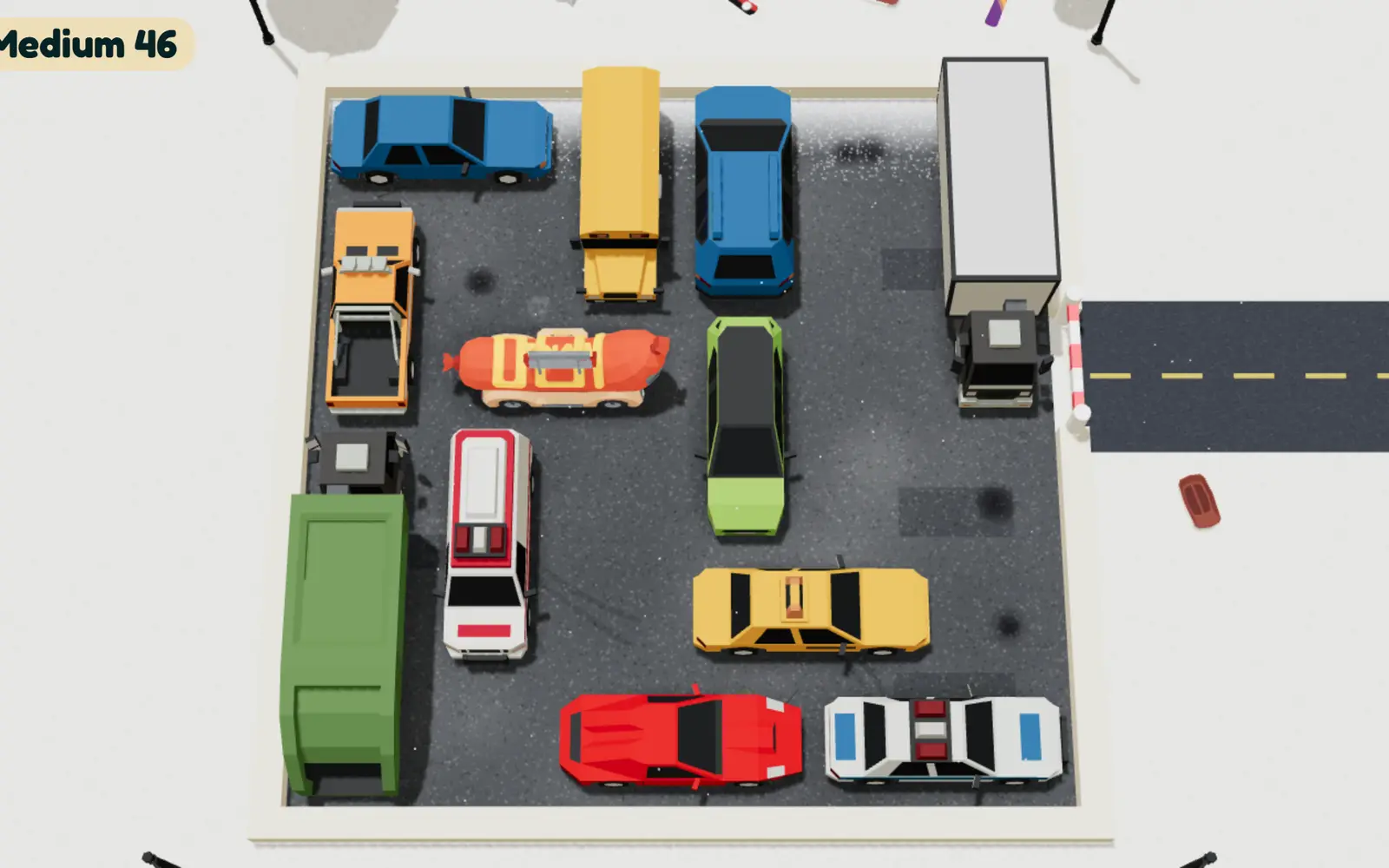
Take Bumper 2 Bumper, our sliding-car puzzle, which is still in development. Its case is simple: one board, sessions from 30 seconds to five minutes, one-finger drag controls and no reading required. That’s a game made for a phone.
If an idea can’t make that case, it doesn’t get built.
Step 2: Write the spec first
Before any code, each game gets a detailed written spec. Ours follow a consistent shape:
- Prime directives. The few rules that can never be broken. For example, “never block play” and “verify on the real target.”
- Exact constants. The real numbers: board sizes, card counts, scores, timings. Nothing left as “about right.”
- Rules, written precisely. Including the edge cases, like what happens when the draw pile runs out.
- Rulings on conflicts. When two goals clash, the spec says which one wins. One of our tactics specs says that if a phone can’t hold its frame rate, visual extras get cut in a set order, and the core feedback never does.
- The words on screen. Button labels, toasts and messages, written once and reused everywhere.
- Numbered acceptance tests. A checklist of things that must be true before a milestone counts as done.
Specs are revised in place as we learn, with a short note about what changed and why. That history turns out to be one of the most useful things we keep.
Step 3: Build the rules so they can be tested
We like to keep a game’s rules separate from the pictures on screen. In Number Phase, the rules engine is its own piece of code with no screen attached at all. All its randomness comes from a seed stored with the game, so any game can be replayed exactly, move for move. That makes bugs reproducible instead of mysterious.
It also lets us run games without people. Number Phase has a test that plays a thousand seeded bot-versus-bot games and fails if any of them crashes, stalls or runs suspiciously long.
Puzzles get the same treatment. Bumper 2 Bumper’s levels are made by a generator and checked by a solver, so each level’s par is the true fewest moves, not a guess. Our upcoming daily logic puzzle is built so that every puzzle has exactly one answer you can reach by logic alone, with no guessing.
Step 4: Make it playable early
We don’t wait for a finished game to play it. Each milestone ends with a build that opens on a phone from a link, so the game can be judged where it will actually be played.
Early builds are rough on purpose. A grey-box version with simple shapes tells you whether the core idea is fun long before the art arrives. Tiki Tiles, our block puzzle, started that way: a plain board, plain blocks and the core rules. The polish came after the game proved itself.
Step 5: Test on real phones with real taps
A game isn’t done until it plays correctly on a real phone, through real taps. That’s a rule across our specs. Tests that poke at the code from behind the scenes are useful, but they don’t count as proof that a player can actually do the thing.
Some of the details we check on every game:
- Touch targets at least 44 pixels, so thumbs don’t miss.
- Nothing covers the game’s controls, including our own HulaGames toasts and buttons.
- Phone-sized screens first, then desktop, with no sideways scrolling.
- Frame rate and load time on a mid-range phone, not just a fast one.
We also design for the moments people forget. Tiki Tiles keeps working offline after one online load. Number Phase saves after every action and Double Bust saves between hands, so closing the tab mid-game doesn’t cost you your progress.
Step 6: Tune with simulated playtests
Some balance problems only show up across thousands of games. So for several titles we run automated players that follow different styles, then look at where they win and lose.
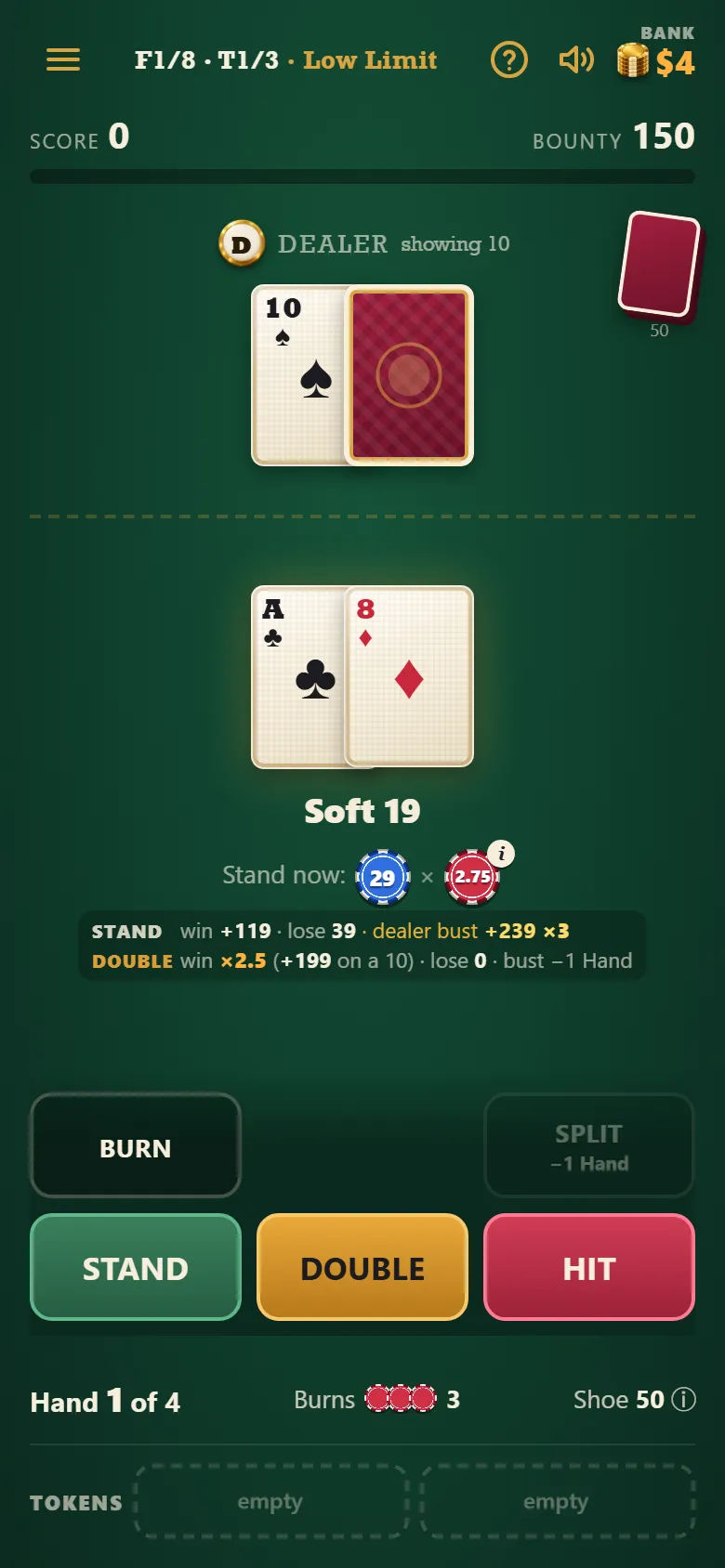
Double Bust, our blackjack card roguelite, is a good example. Playtests flagged one early table as a wall, and simulated runs measured how much to soften it. Analysis also showed that doubling down was the best play far too often, because a lost double still scored. The fix made a Double a real commitment: a won double now scores ×2.5, and a lost one scores nothing. Shop prices and perks were retuned the same way, so a run can’t turn trivial and an unlucky reroll can’t leave you broke.
Simulations shaped Number Phase too. Its deck carries extra Wild cards, because simulations showed they cut dead draw-and-discard stretches by about 30% without making the game less skillful.
Then real play confirms it. Number Phase got gentler warm-up levels, easier bots and a coaching tip after a loss, all to make the first few games friendlier.
Step 7: Give every game its own look
Each game gets its own art direction, chosen to match its mood rather than a single house style.
- Tiki Tiles has glazed tiles, a bamboo board and a golden-hour beach.
- Bumper 2 Bumper shows a 3D parking lot from high above, lit by one warm sun from the top left, with a beach strip and an animated shoreline beyond the lot.
- Number Phase uses original card art and a table you can dress with felts and card backs.
- Our upcoming tactics game is set on neon streets at night.
Readability always beats decoration. Our upcoming match-3 gives every tile color its own shape (crown, star, drop, leaf and gem), so the board is easy to read for everyone, including players who have trouble telling colors apart. And in 3D games, we pick camera angles so even the far side of the board stays big enough to tap.

Step 8: Plug into the shared account and points layer
Every game on HulaGames connects to one shared layer: guest profiles, saved accounts, Hula Points, daily quests, badges and weekly leaderboards. A game reports moments that already exist inside it, like a level won or a boss beaten, and our server decides what they’re worth.
Two principles keep this honest:
- Points never touch a game’s balance. We never change a game’s rules, rewards or progression to fit the points system, and no game’s own currency converts to or from Hula Points.
- Points can’t be faked or bought. They’re awarded on our server with daily caps, never sold and never cash.
That shared layer is also why new games can join the network without reinventing accounts and rewards each time. You can read more in our guide to what Hula Points are.
Step 9: Ship, listen and keep improving
Because our games run in the browser, an improvement reaches you the next time you load the game. Each game keeps short what’s-new notes, and feedback that comes in through the site lands in one place where we read it.
It’s also why we build for the web first, which we explain in browser games vs apps.
Come play what we’ve made
The best way to see this process is to feel the result. Pick a game, play a round on your phone, and notice how quickly you’re in. Then tell us what you think. That feedback becomes the next revision of the spec.
FAQ
How does HulaGames make its games?
Every game starts with a detailed written spec, then a small playable version that opens on a phone from a link. We test with real taps on real phones, tune difficulty with simulated playtests, and only call a milestone done when it plays correctly on the target device.
Why do you test games on phones first?
Because phones are where our games are designed to be played first. We design for a phone held in one hand, keep buttons large enough for a thumb, and make sure nothing covers the game’s controls, then make it work on desktop too.
Do Hula Points change how a game is balanced?
No. Games only report moments that already exist, like a level won or a boss beaten. Points never change a game’s rules, balance, rewards or progression.
Do you use simulations to balance games?
Yes. For several games we run thousands of automated games with computer players to find difficulty walls and rules that are too strong, then confirm the changes with real play.