What Is a Roguelite? A Plain-English Guide to the Genre
What is a roguelite? A plain-English guide to runs, permadeath, random layouts, run versus permanent progression, and why deck-building fits so well.
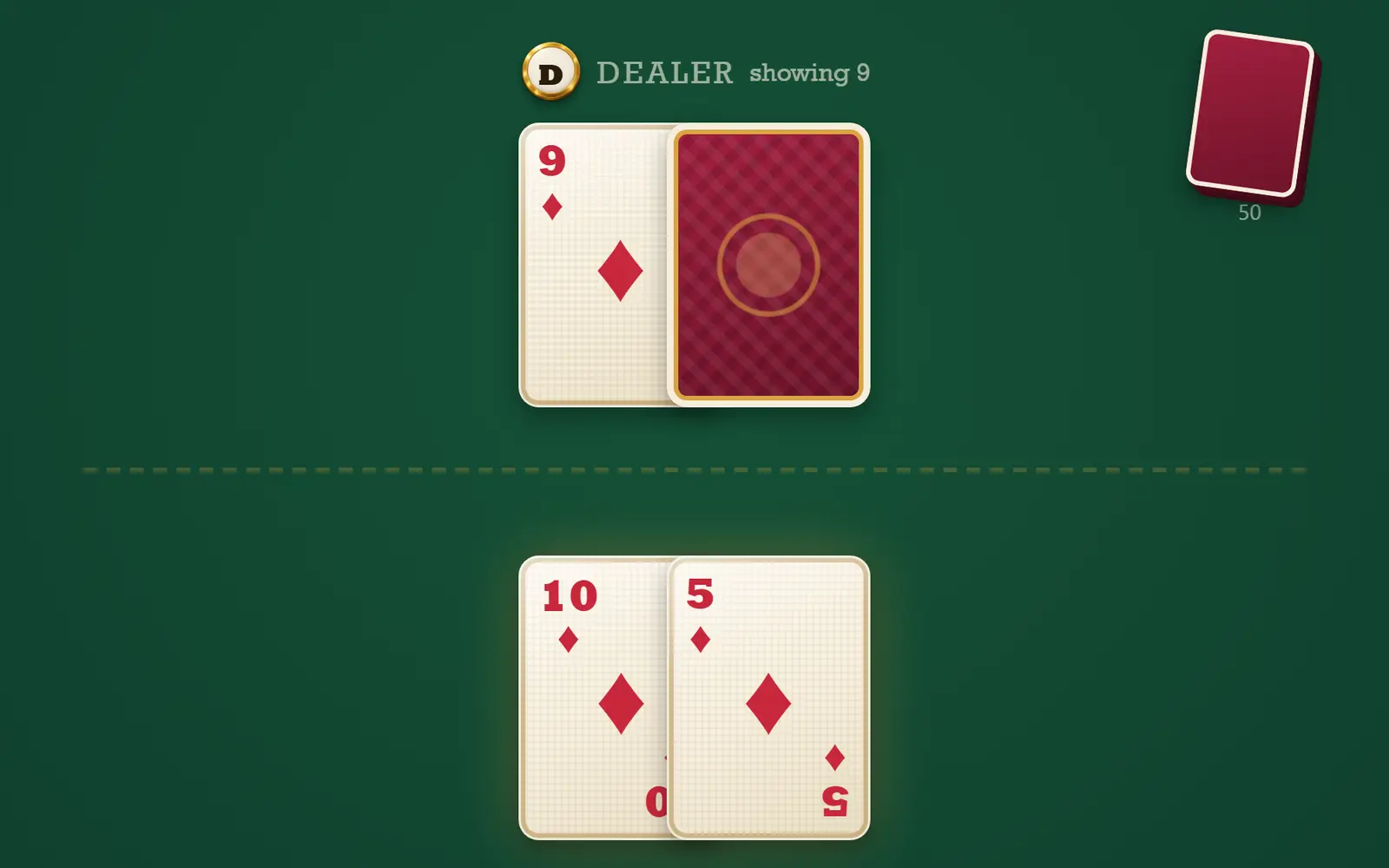
What is a roguelite? It’s a game built around runs: you start fresh, make your way through a series of challenges that are shuffled differently each time, grow stronger as you go, and when you lose, the run ends and you start again. The fun is in the choices you make inside each run, and in getting a little smarter every time you try.
That’s the short answer. The longer one involves where the name comes from, how roguelites differ from roguelikes, and why card games have become one of the genre’s favorite homes. We’ll use Double Bust, our blackjack card roguelite, as a running example.
Where the name comes from
The genre is named after an early-1980s computer dungeon game in which you explored randomly generated floors and lost everything if your character died. Games that copied its structure came to be called “roguelikes.”
Over time, developers kept the core idea (random layouts, permanent loss) but loosened other parts. Games that took the structure in a lighter or more forgiving direction picked up the name “roguelite.” Today the word covers a huge range of games, from action games to strategy games to card games.
The core ingredients
Most roguelites share a handful of traits.
1. Runs
A run is one attempt from the beginning to a win or a loss. Runs are usually short enough to play in a sitting. In Double Bust, a single table takes about 2 minutes and a winning run takes about 25 to 40.
2. Permadeath (for the run)
When you lose, the run is over. You don’t reload a save from five minutes ago. That stake is what makes every decision feel like it matters.
Double Bust leans into this: it saves after every action, including the state of its random number streams, so quitting and reloading never rerolls a hand or the shop. The cards you’re dealt are the cards you’re dealt.
3. Randomness that changes each run
Layouts, enemies, rewards and shop offers are shuffled for every run. You can’t memorize a route. Instead you learn the systems: what’s strong, what combines well, when to take a risk.
4. Growing stronger inside the run
As a run goes on, you pick up items, perks or upgrades that change how you play. Two runs of the same game can feel completely different because you built different things.
5. Escalating challenge
Each stage is harder than the last, so your build has to keep up. Many roguelites end each section with a boss that tests whether it can.
Key takeaway: a roguelite is a loop of short, high-stakes runs where you build something new each time and lose it when the run ends.
Roguelike vs. roguelite
People argue about the line, but here’s the plain-English version:
| Roguelike | Roguelite | |
|---|---|---|
| When you lose | Start over with nothing | Start over, sometimes with permanent unlocks |
| Pace | Often slow and turn-based | Anything from turn-based to fast action |
| Rules | Strict and traditional | Loosened, borrowed or remixed |
| Learning curve | Often steep | Usually gentler |
In everyday use, the words blur. Plenty of players call any run-based game with permadeath a roguelike, and that’s fine. “Roguelite” mostly signals “this takes the run structure and makes it friendlier.”
Run progression vs. permanent progression
This is the idea that confuses people most, so it’s worth slowing down.
Run progression is everything you gain during one attempt: the perks you bought, the cards you added, the upgrades you picked. When the run ends, it’s gone.
Permanent progression (often called meta-progression) is anything that carries across runs, like new starting options, new items added to the pool, or harder difficulty levels you can choose. Many roguelites use it to give you a sense of moving forward even after a loss.
Not every roguelite leans on it, though. Some keep almost everything inside the run, and what you carry forward is mostly your own knowledge. Double Bust works that way today: your Grifts, Cheat Tokens and enhanced cards all live inside the run. What you take into the next one is a better feel for when to stand, when to double, and which Grifts work together.
Why card games and roguelites fit so well
Deck-building is one of the most popular kinds of roguelite, and for good reason. A deck is a natural thing to grow during a run:
- Adding cards gives you new options.
- Removing cards makes your good cards show up more often.
- Upgrading cards makes each draw count for more.
Because your deck is different every run, your strategy is too.
Double Bust: a roguelite built on blackjack
Double Bust takes the rules of blackjack and wraps a roguelite run around them. Here’s how each ingredient shows up.
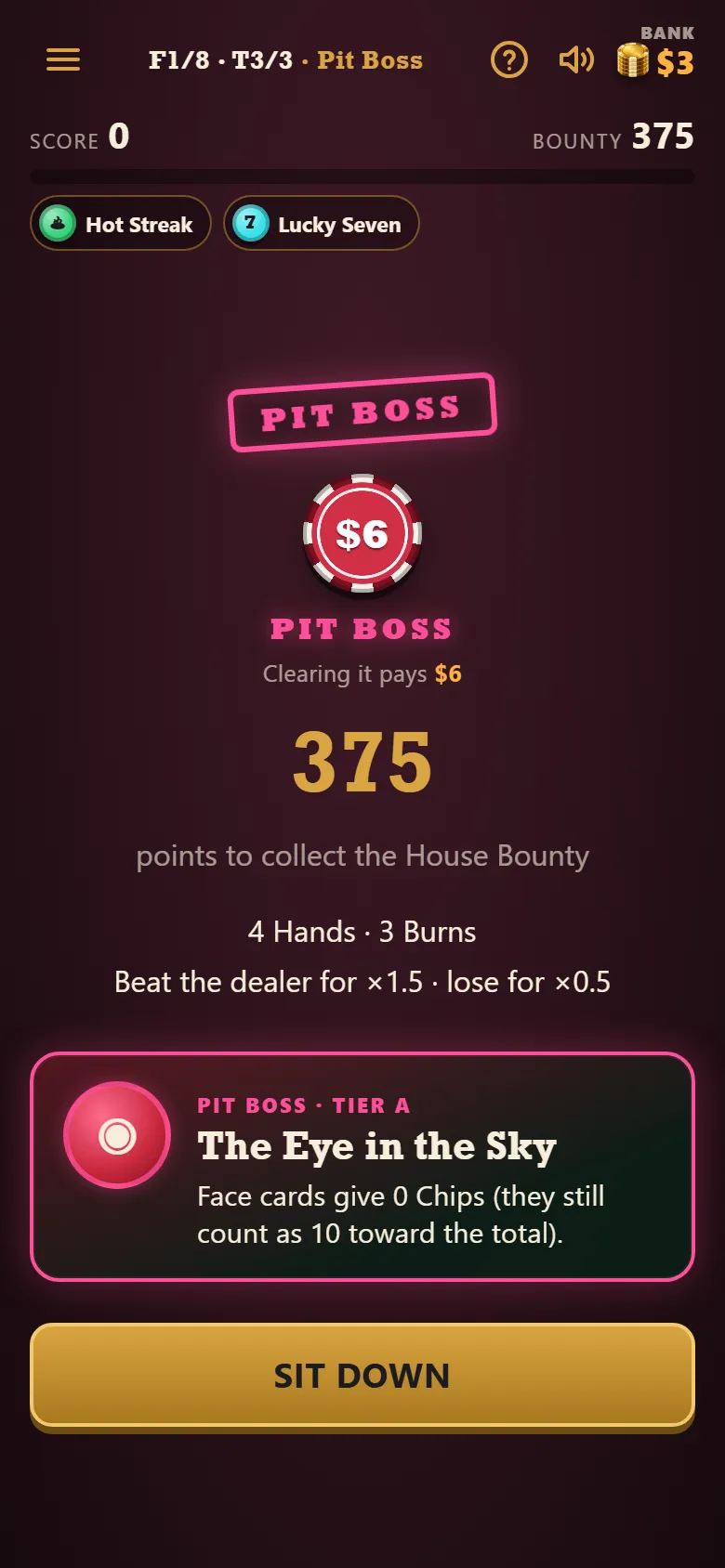
- The run: 8 Floors, each with three tables (Low Limit, High Roller and a Pit Boss). Clear all 8 and beat The House to win.
- The stakes: each table has a Bounty, a target score you must reach within 4 Hands. Miss it and the run is over.
- The decisions: every hand you hit, stand, double down or split against the dealer’s upcard, then score the hand as Chips × Mult.
- Growing stronger: between tables you visit the Back Room to buy Grifts (passive perks that change how hands score), Cheat Tokens you can use mid-hand, and Packs that add or enhance cards.
- Deck-building: your shoe is your deck. It starts as a standard 52 cards, and every card you add, remove or enhance stays for the rest of the run.
- Bosses: each Floor ends with a Pit Boss that bends the rules, from a dealer who wins pushes to a blindfold on your second card.
And it’s all a card game: the chips and dollars live only inside the game, with no real money involved. If you want the full rules, start with our Double Bust how to play guide, and for build ideas, the Grifts guide.
How to get better at roguelites
A few habits help in almost any roguelite:
- Expect to lose early runs. That’s how you learn what the threats are.
- Pick a plan by mid-run. Grabbing every shiny thing leads to a build that does nothing well.
- Value things that combine. Two perks that work together beat two strong perks that don’t.
- Plan for the boss. If you can see the boss coming (Double Bust shows each Floor’s Pit Boss at the start of the Floor), shop with it in mind.
- Play one more run. Short runs are the point. Each one teaches you something.
Try a run
The best way to understand the genre is to play a run. Double Bust is free in your browser, a table takes about two minutes, and losing teaches you as much as winning. Want something different? Browse every game on HulaGames.
FAQ
What is the difference between a roguelike and a roguelite?
A roguelike is usually strict: when you lose, you start over with nothing carried forward. A roguelite keeps the run-based structure but softens it, often with permanent unlocks or a lighter, faster format. In everyday use the two words overlap a lot.
What is a run in a roguelite?
A run is one attempt from the start to either a win or a loss. Everything you collect during it, like items, perks and upgraded cards, usually ends when the run ends.
Why are roguelites so replayable?
Each run is shuffled differently, so the choices you face change every time. You can’t memorize a perfect path, and you get better through understanding the systems rather than memorizing levels.
What is a deck-building roguelite?
It’s a roguelite where your deck of cards is the thing you grow during a run. You add strong cards, remove weak ones and upgrade the rest, so each run’s deck is different.