Why Block Puzzles Are So Satisfying
Why do block puzzle games feel so good? The clear-the-line payoff, shapes that almost fit, short sessions and tiny bits of polish. A designer's look inside.
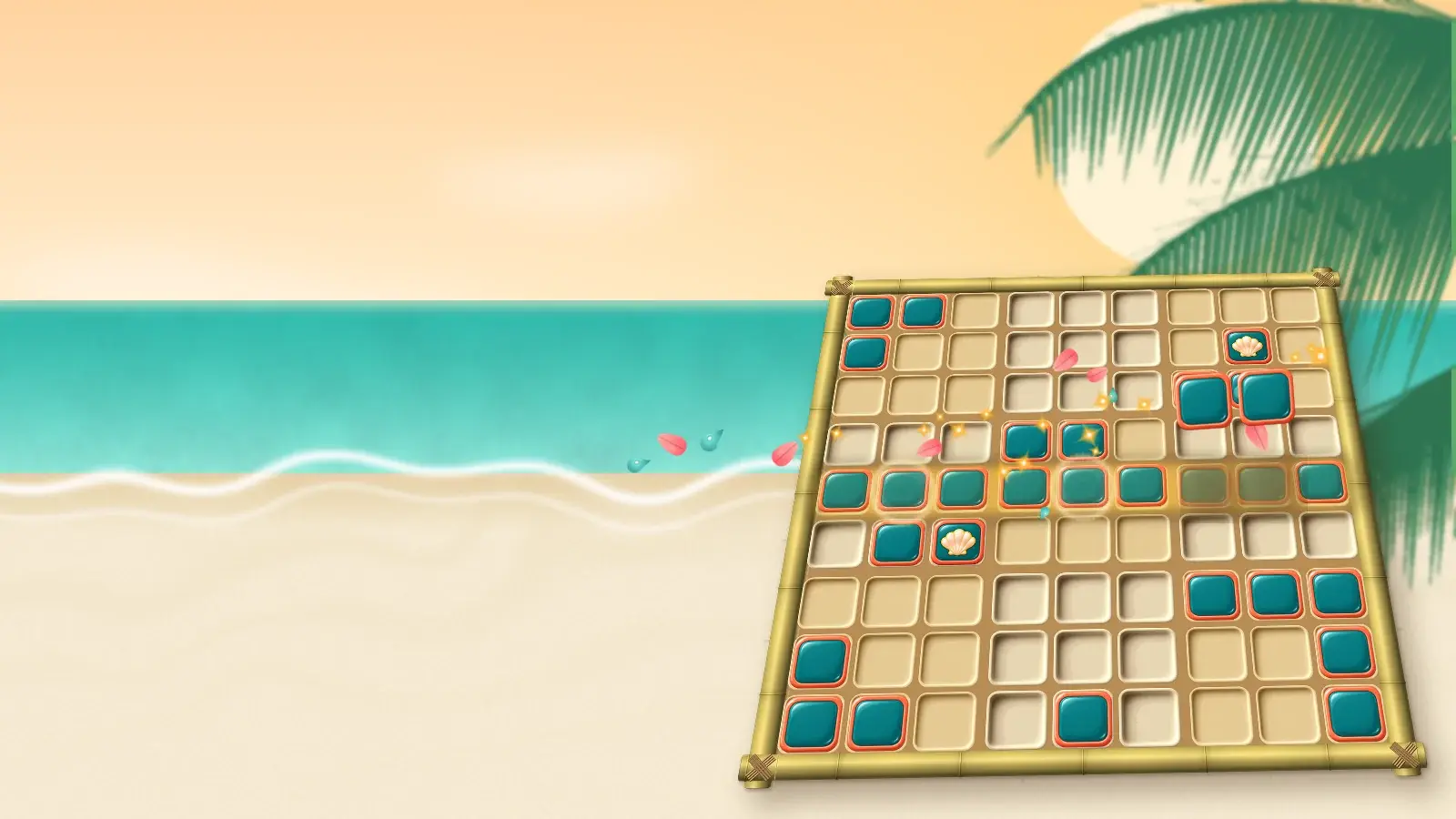
Block puzzle games have a simple promise: here are some shapes, here’s a board, make the lines disappear. There’s no story to follow and no rules to memorize. Yet a good one can hold your attention for far longer than you planned.
Why? Part of it is the moment a line clears. Part of it is the way a piece that almost fits pulls at your attention. And part of it is that a whole game fits in a few minutes. Here’s how we think about each of those as designers, using our own block puzzle, Tiki Tiles, as the example.
The clear: tension, then release
Every block puzzle is built around one beat. You see a row that’s nearly full. You find a piece that finishes it. You drop it in, and the row vanishes.
That beat works because it has two halves. First comes a small bit of tension: the gap, the search, the “will this fit?” Then comes release: the clear. The board opens up again, and you get the space back that you’d been spending.
What makes block puzzle games special is how often that beat happens. It’s not once per level. It can happen every few seconds, many times in one sitting.
Designers make that release feel bigger with what we call “juice.” In Tiki Tiles, clears come with pops, particles, a little screen shake, a callout and a rolling score. Clear several lines with one piece and the game names it: a Double, a Triple or a Tidal Wave. None of that changes the rules. It just makes the payoff feel as good as it is.
Shapes that almost fit
The second ingredient is older than video games. Fitting shapes together is a puzzle people have enjoyed for a very long time, from wooden tangrams to tile-fitting sets made of polyominoes, the family of shapes built from joined squares.
A block puzzle hands you a few of those shapes and an awkward space, and asks: where does this go? Your eyes start testing spots almost on their own. That’s a pleasant kind of focus. The problem is right there in front of you, fully visible, with nothing hidden.
There’s also a pull in the near miss. A gap that’s one cell too narrow, or a row that only needs one more tile, is hard to stop thinking about. When the right piece finally arrives, the relief is real.
Your pace, not the game’s
Block puzzles come in two broad families.
| Falling-block puzzles | Block placement puzzles | |
|---|---|---|
| How pieces arrive | They drop on their own | They wait in a tray |
| Pressure | Speed and reflexes | Planning and space |
| How a game ends | The stack reaches the top | No piece fits anywhere |
| Feel | Tense, fast | Calm, thoughtful |
Falling-block games are thrilling, and they’re about reacting. Placement puzzles take that pressure away. In Tiki Tiles, your pieces wait in the tray until you’re ready, so you can study the board before you commit.
That changes the whole mood. With nothing falling on you, the game becomes a quiet conversation between you and the board. Many people find that relaxing, and it’s why we set Tiki Tiles on a sunny beach with a gentle look and feel. The only pressure is the one you create by filling the board.
Short sessions that still feel complete
A run of a block puzzle can last two minutes or twenty, and both feel like a complete experience. There’s a beginning (an empty board), a middle (the board filling and clearing) and an end (no piece fits).
That flexibility matters in everyday life. You can play while the kettle boils and still finish something. Nothing is left hanging, no long level to come back to, no save point to find.
Tiki Tiles leans into this with three shapes of session:
- Classic is endless. Settle in and see how far you can go.
- The Daily is one board for everyone, once a day, with medals from Bronze to Platinum.
- Journey is 100 levels on an island map, each with a clear target.
Different moods, same simple rules.
Block puzzle games and flow
Game designers often talk about “flow,” the absorbed state where a task is challenging enough to hold your attention but not so hard it frustrates you. You don’t need a theory to recognize it. It’s the feeling of looking up and realizing twenty minutes passed.
Block puzzle games are well suited to that state, for a few reasons:
- The goal is always clear. Fill lines, keep space.
- Feedback is instant. You know right away whether a placement was good.
- Difficulty rises naturally. The board starts open and gets tighter, so the challenge grows as you warm up.
- Every decision is small. One piece at a time, so it never feels overwhelming.
Key takeaway: the best block puzzles are simple to read and deep to play. A beginner understands the board instantly. An experienced player sees combos, landing strips and risks the beginner hasn’t noticed yet.
Luck you can manage
You don’t choose which pieces you get. That bit of randomness keeps every run fresh. But skill decides what you do with them.
Good players plan for pieces they haven’t seen yet. They keep room for long bars, avoid single-cell holes, and set up lines that several different shapes could finish. That mix of chance and control is a big reason the genre stays interesting after hundreds of runs. If you want the practical side of this, our block puzzle strategy guide breaks it down.
A little ritual
Daily challenges add something else: a shared moment. When everyone plays the same board, your score becomes a small story you can compare with friends. Coming back each day becomes a tiny ritual, like a crossword with your morning coffee.
That’s why Tiki Tiles has a Daily with a streak, a calendar and a monthly trophy. You can read more about it in our Tiki Tiles Daily guide.
Try it yourself
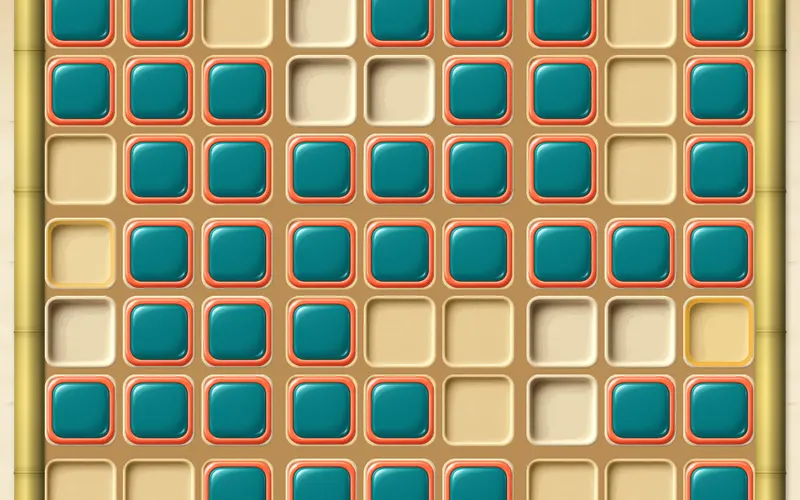
The best way to understand why block puzzle games feel good is to play one with a bit of attention. Notice the moment before a clear, and the moment after. Notice how much calmer the board feels with one long gap open.
Tiki Tiles is free in your browser on phone or desktop. Play one round, and see if you can stop at just one.
FAQ
Why are block puzzle games so satisfying?
They give you a clear goal, a visible problem and an instant payoff. You see a gap, find a piece that fits, and the line clears with a pop. That loop of tension and release is short enough to repeat many times in one sitting.
Are block puzzles relaxing?
Many people find them relaxing, especially placement puzzles, where pieces wait for you instead of falling. You set the pace.
What is the difference between falling-block and block placement puzzles?
In falling-block games, pieces drop on their own and you react against the clock. In placement puzzles like Tiki Tiles, pieces wait in a tray and you choose where each one goes, so the challenge is planning rather than reflexes.
Where can I play a free block puzzle game?
Tiki Tiles on HulaGames is a free 9x9 block puzzle that runs in your browser on a phone or computer, with Classic, Daily and Journey modes.