Block Puzzle Strategy: How to Score Higher in Tiki Tiles
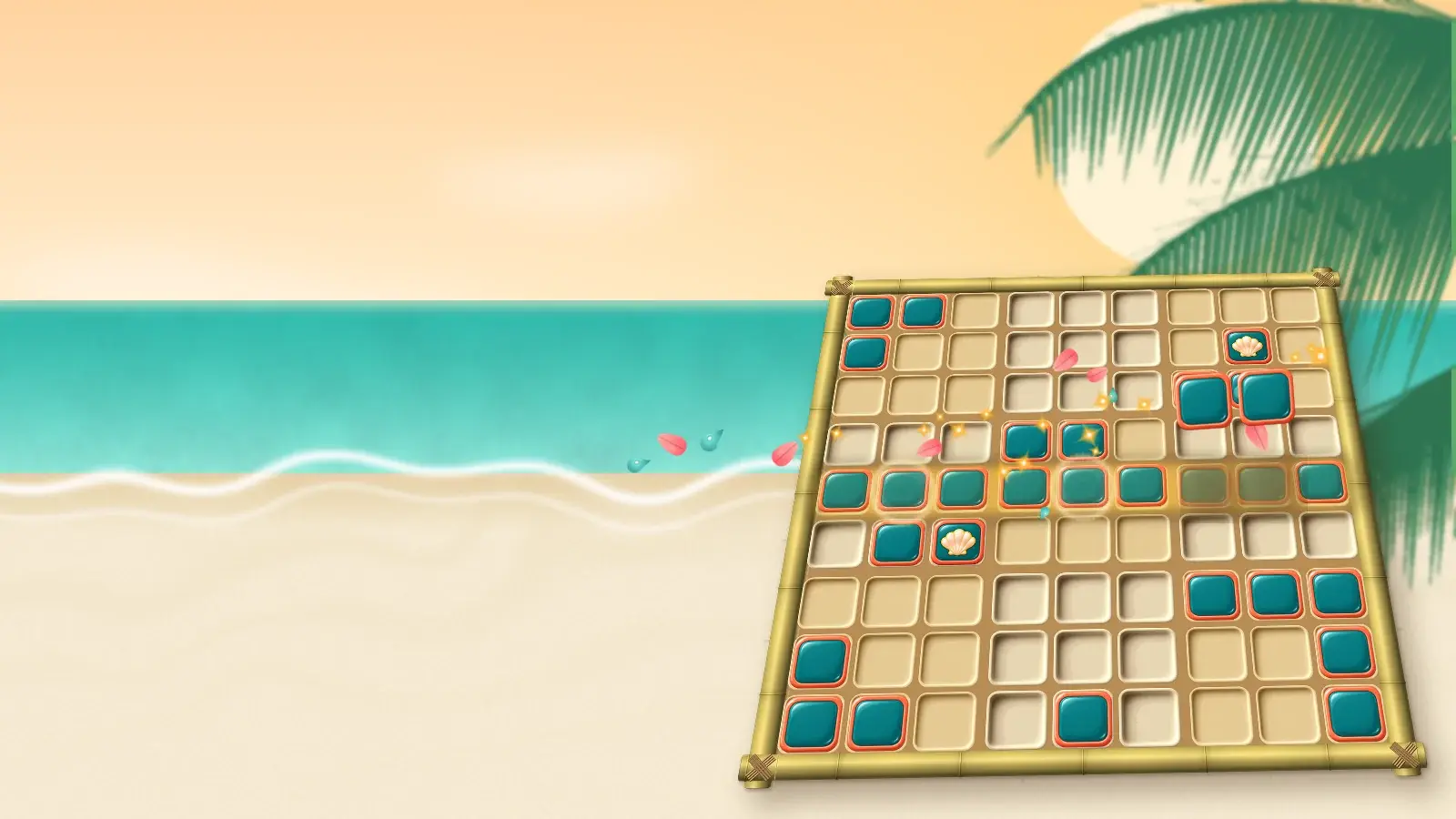
Block puzzle strategy that works: plan the whole tray, keep room for big pieces, set up multi-line combos and keep Tiki Fire burning for higher scores.
Good block puzzle strategy comes down to one idea: the board is your only resource, and every block you place spends some of it. Players who score high aren’t luckier with their pieces. They protect open space, plan the whole tray before they move, and set up clears that pay off several lines at once.
This guide uses Tiki Tiles, our free 9x9 block puzzle, for every example. If you’re brand new, read how to play Tiki Tiles first. If you know the basics and want bigger scores, start here.
The core rule of block puzzle strategy
In Tiki Tiles you fill rows, columns and 3x3 boxes to clear them, and the run ends when no block in your tray fits anywhere. Notice what ends the game: not a bad score, but a lack of space for a specific shape.
So the real question on every move isn’t “where does this piece fit?” It’s “after this piece goes down, will everything else still fit?” Hold that question in your head and most of the tips below follow naturally.
1. Plan the whole tray, not just the next piece
Before you touch anything, look at every block in the tray. Then ask where each one could go, and in what order.
Order matters more than people expect. Say your tray holds a long straight bar and a small L shape. The bar needs a long empty run; the L can squeeze into a corner. If you drop the L first and it lands in the middle of the only long gap on the board, the bar has nowhere to go. Place the bar first, and the L still finds a home.
A quick habit that helps: place the hardest piece first. The hardest piece is usually the biggest or the most awkward shape. Small pieces are flexible, so let them fill in afterward.
2. Keep a landing strip for big pieces
The blocks that end runs are the big ones: long bars (up to five tiles) and chunky squares. They need open room that small pieces don’t.
Try to always keep at least one of these available:
- An empty run of five cells in some row or column, for the longest bars.
- An open area a few cells wide, for squares and big L shapes.
Key takeaway: if a big piece showed up right now, could you place it? If the answer is no, your next move should be the one that opens space, even if it isn’t the flashiest.
3. Treat holes as debt
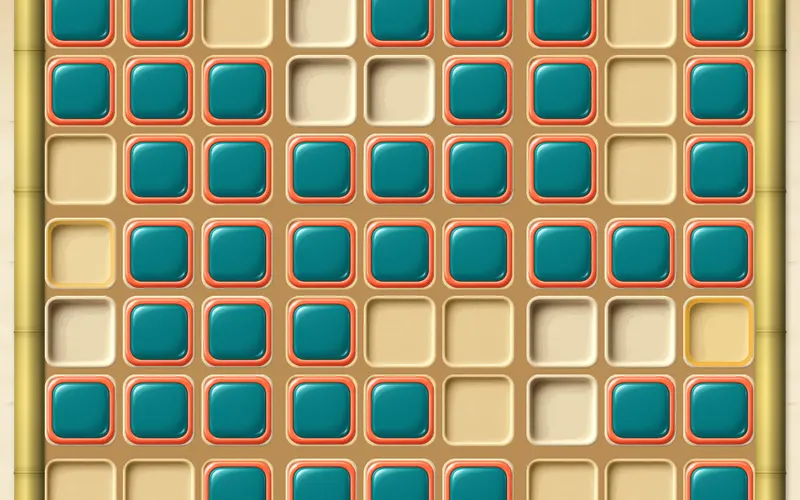
A single empty cell surrounded by filled cells is a hole. Most blocks are bigger than one square, so holes are hard to fill and they block the row, the column and the box they sit in from clearing.
Ways to avoid them:
- Place pieces flush against edges and against other tiles, not floating in open space.
- Before releasing a piece, glance at the cells right next to it. Are you about to wall off a lonely gap?
- If you already have a hole, make filling it a priority whenever a piece fits.
4. Use the 3x3 boxes
Rows and columns need nine tiles stretched across the whole board. A box needs nine tiles packed into one small square. That makes boxes the quickest clears for compact shapes like squares and short L pieces.
When a box is six or seven tiles full, scan your tray for the piece that finishes it. Box clears also help keep the middle of the board open, which is where crowding hurts most.
5. Set up multi-line combos
Clear several lines with one piece and Tiki Tiles calls it a Double, a Triple or, beyond that, a Tidal Wave. Those are the big moments in a run, and you can build toward them on purpose.
The cleanest setup is stacking rows that are all missing the same cell. Here’s the bottom-right corner of a board, where # is a filled cell and . is empty:
row 7:  # # # # # # # # .
row 8:  # # # # # # # # .
row 9:  # # # # # # # # .
Rows 7, 8 and 9 are each missing only the last cell. When a three-tall vertical bar shows up in your tray, dropping it into column 9 finishes all three rows at once. It also completes the bottom-right 3x3 box, so that clears too. One piece, a huge clear.
You can build the same thing sideways: several columns all missing the same row can be finished together by a horizontal bar.
A second combo pattern is the corner. Say column 1 is full except its bottom three cells, and row 9 is full except its first two cells. The empty cells form an L shape that meets in the bottom-left corner. An L-shaped block that covers exactly those cells finishes the row and the column together.
When to stop building and take the clear
Setting up combos means leaving lines unfinished on purpose, and that costs space. A good rule:
- Board mostly open: build toward a combo.
- Board half full: take combos if they’re one piece away; otherwise clear normally.
- Board crowded: clear anything you can. Survival first.
6. Keep Tiki Fire burning
Tiki Tiles also rewards rhythm. Clear lines on moves in a row and you keep Tiki Fire burning. That’s a different skill from big combos: instead of one huge clear, you want a clear on every move.
The trick is to keep a line “in the oven.” Leave one row or box nearly complete, so that whenever your next piece arrives, there’s a good chance it can finish something. When you clear one line, look for the next nearly finished line before placing anything that doesn’t clear.
Combos and Tiki Fire can work together. A board with two or three nearly done lines lets you clear on every move and occasionally land a Double when one piece finishes two of them.
7. Spend undo wisely in Classic
In Classic you get one free undo per game, plus one more every 500 points, up to three. Undo is most valuable for a single costly mistake, like dropping a big block in the wrong spot and splitting the board in two.
Don’t spend it on small slips early in a run. Keep it for the move that would otherwise end the game.
8. Adjust for each mode
The same strategy applies everywhere, but each mode has its own goal.
| Mode | What to focus on |
|---|---|
| Classic | Long-term space. Complete the three run goals when they’re cheap, and protect your undo. |
| Daily | Everyone gets the same board, so slow down. Every point counts toward Bronze, Silver, Gold or Platinum. |
| Journey | Read the level goal first. A shell level and a score level reward different choices. |
On Journey levels, the target changes what’s worth doing. If the level asks for shells, collecting them matters more than making the prettiest combo. Our Tiki Tiles Daily guide covers the Daily in more detail.
A quick checklist before every move
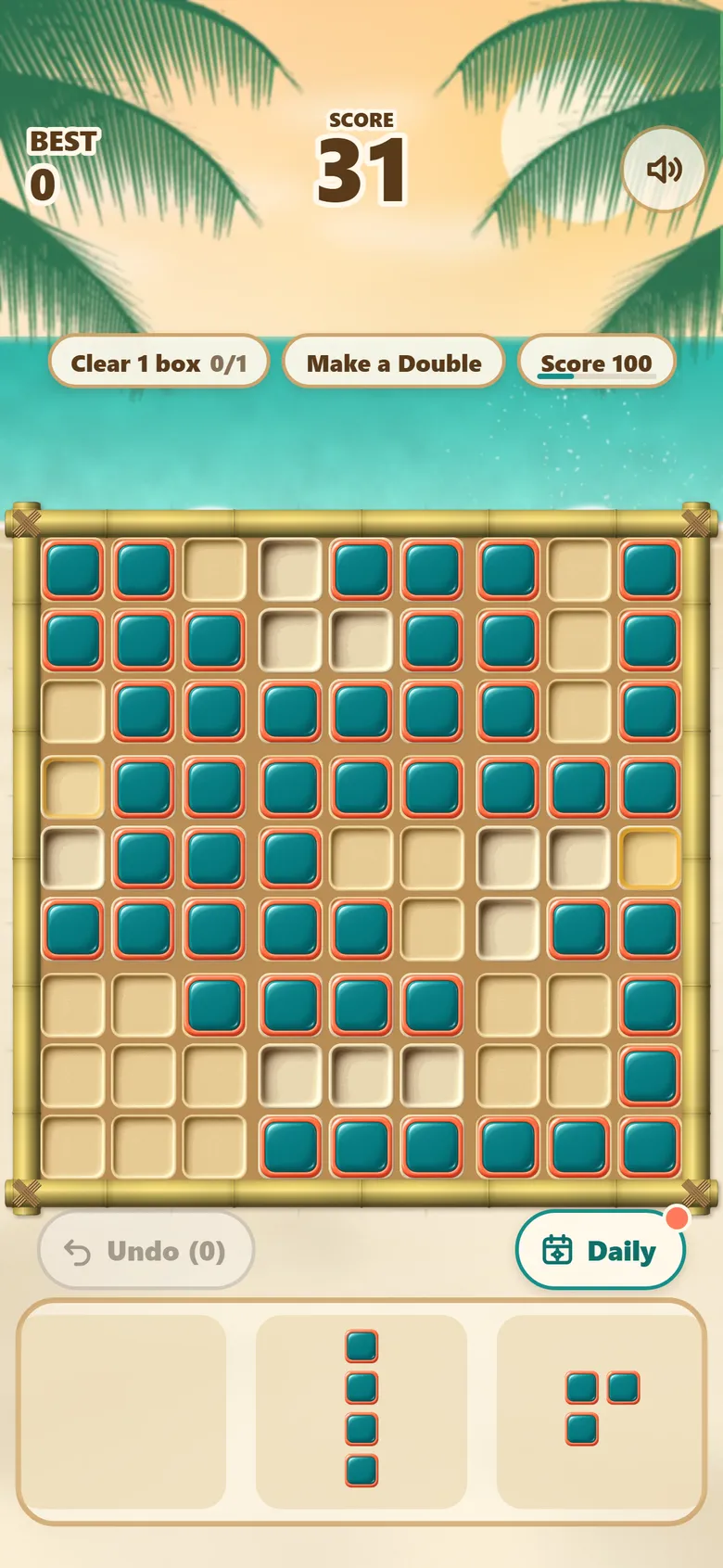
When a run gets tight, run through this list. It takes seconds.
- Can every piece in my tray fit somewhere right now?
- Which piece is hardest to place? Can I place it first?
- Does this move finish a row, column or box? If not, does it set one up?
- Am I about to create a hole?
- If a long bar appeared next, is there room for it?
Common block puzzle mistakes
Playing piece by piece. Placing whatever block catches your eye first, without checking the rest of the tray, is a classic run-ender.
Building only in rows. Columns and boxes clear too. A board that’s lopsided toward rows often has three nearly full columns nobody noticed.
Chasing the perfect piece. Holding a gap open for one exact shape while the rest of the board fills up rarely works. Have a backup plan for every gap.
Put it into practice
Strategy clicks fastest one idea at a time. Play a Classic run focused only on planning the whole tray, then one where you build a three-row combo on purpose.
Open Tiki Tiles and see how far a little planning takes you. If you’d like to read about why these games feel so good to play, try why block puzzles are so satisfying.
FAQ
What is the best strategy for block puzzle games?
Protect open space. Plan where every piece in your tray will go before placing the first one, keep a clear area big enough for the largest blocks, and avoid leaving single empty cells that are hard to fill.
How do you get combos in Tiki Tiles?
Clear several lines with one piece for a Double, Triple or Tidal Wave. The easiest setup is two or three rows (or columns) that are all missing the same cells, so one block finishes them together.
What is Tiki Fire?
Tiki Fire keeps burning while you clear lines on moves in a row. Keeping a nearly finished line in reserve helps you clear again on the next move.
Should I clear lines right away or wait for a combo?
Early in a run, when the board is open, you can afford to set up combos. When the board gets crowded, take any clear you can, because space matters more than style.