Jungle Duel Animals: Every Card and Power, Explained
All seven Jungle Duel animals explained: Mouse, Monkey, Snake, Gorilla, Tiger, Lion and Parrot, with each card's strength, its power and when to play it.
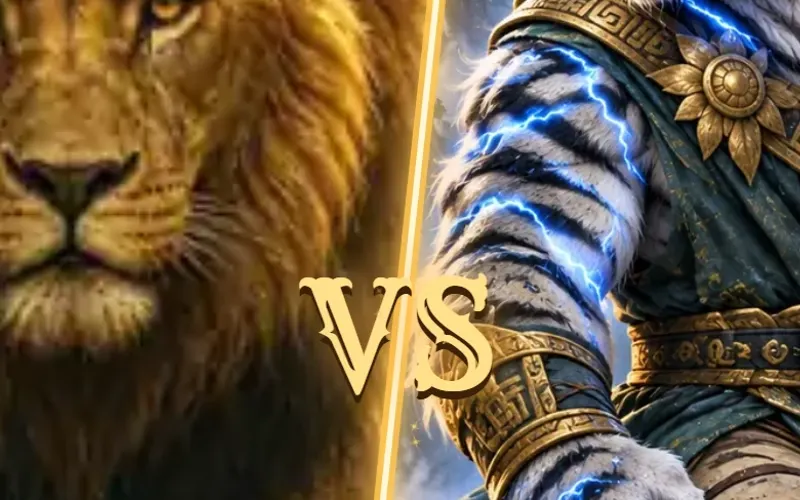
There are seven Jungle Duel animals, and knowing them well is most of the game. Six have a fixed strength from 0 to 5, the Parrot copies its neighbour, and most carry a power that can turn a clearing. The Lion is the strongest card in the deck, yet a single Mouse can make it worth nothing.
This guide takes each animal in turn: what the in-game rules say it does, when it shines, and when to hold it back. If you are brand new, start with our complete beginner guide to Jungle Duel for the basics of clearings, moves and scoring, then come back here.
Quick reference: all seven animals
| Animal | Strength | Power in one line |
|---|---|---|
| Snake | 0 | Bites the weakest other face-up animal on each side of its clearing |
| Mouse | 1 | Makes every Lion at its clearing worth 0 |
| Monkey | 2 | Three together open a fourth slot in their column |
| Gorilla | 3 | Three together add +1 to that side’s total |
| Tiger | 4 | No special power |
| Lion | 5 | Strongest, unless a Mouse shares its clearing |
| Parrot | ? | Copies the strength of the face-up animal it points toward |
Two rules from the core game matter for every animal. First, placing an animal pulls an exposed matching animal from the clearing next door onto the same column, and at a Bridge a matching exposed animal on the far side is pulled across too. Second, a team of three matching animals earns a fruit tree, which you can plant to add 1 point to any clearing. Keep both in mind as you read.
Snake (strength 0)
The power: when the Snake is placed face-up, or when a hidden Snake is revealed, it bites the weakest other face-up animal on each side of its clearing, yours included.
The Snake brings no strength of its own, so it is never about raising your total. It is about changing the shape of a clearing. It hits both sides at once, which means the question is always “who loses more from this bite?”
When to play it:
- At a clearing where your own weakest face-up card is something you do not mind losing, and your rival’s weakest is still worth a lot to them.
- Face-down, with Hide 1. A hidden Snake is revealed at round end, so its bite lands when your rival has no turns left to react.
When to hold it: if your weakest face-up animal at that clearing is doing real work, the Snake hurts you as much as your rival. Look at both sides before you commit.
Mouse (strength 1)
The power: the Mouse makes every Lion at its clearing worth 0.
On its own, a Mouse is the weakest scoring card in the deck. Next to a Lion, it is the most powerful. The rules page puts it simply: keep a Mouse for the clearing where your rival has stacked a Lion.
Notice the wording. It is every Lion at its clearing, so it does not care whose side the Lion is on. If you have your own Lion at that clearing, the Mouse will zero it too.
When to play it:
- At a clearing where your rival has invested a Lion and you have none.
- Hidden, so your rival keeps believing their Lion is safe. The reveal at round end is the moment the Lion loses its strength.
- With Play 1, sending it to your rival’s side of a clearing they are leaning on with a Lion. The power works at the clearing, not just on your side.
When to hold it: early in a round, before any Lion has shown up. A Mouse played too soon is just a 1-strength card, and it warns your rival to keep Lions away.
Monkey (strength 2)
The power: three Monkeys together open a fourth slot in their column.
Normally each side holds three cards per clearing. A Monkey team breaks that cap and gives you room for one more animal. Because three matching animals also earn a fruit tree, a Monkey team pays off twice.
When to play it:
- When you already have one or two Monkeys at a clearing and can complete the set.
- At a high-value clearing where an extra slot means one more strong animal than your rival can fit.
- With the pull rule in mind. Placing a Monkey can pull an exposed Monkey from the clearing next door onto the same column, which can help assemble the team.
When to hold it: a lone Monkey is only strength 2. If the set is out of reach, it is a filler card, so use it where a small push is enough or where it costs you little.
Gorilla (strength 3)
The power: three Gorillas together add +1 to that side’s total.
Gorillas are solid on their own and better in a group. Three of them make 9 strength, the bonus adds 1 more, and a three-of-a-kind team also earns a fruit tree.
When to play it:
- As your steady builder with Play 2. Two Gorillas at a valuable clearing are already a strong start.
- When a third Gorilla completes the team. The +1 often decides a close clearing.
When to hold it: be wary of Bridges. An exposed Gorilla at a Bridge can be pulled across when a matching Gorilla is placed on the far side, so a careless placement can feed your rival’s team instead of yours.
Tiger (strength 4)
The power: none. The Tiger is strong and simple.
That simplicity is the point. The Tiger is not affected by the Mouse, which only cares about Lions. It is high strength that does exactly what it says.
When to play it:
- Anywhere you need reliable strength with no surprises.
- Hidden, as a bluff-proof threat. A face-down Tiger beside a clearing your rival thinks they have won is a strong way to steal it at the reveal.
- At a clearing where you suspect a Mouse is waiting. A Tiger there is a safer investment than a Lion.
When to hold it: almost never at a Swamp on your own side. Strength there wins you minus points.
Lion (strength 5)
The power: the Lion is the strongest animal, unless a Mouse shares its clearing.
The Lion wins clearings by itself, which makes it both your best card and your biggest target. Every Lion you show is an invitation for a Mouse.
When to play it:
- Late in a round, when your rival has fewer chances to answer it.
- Hidden, so it cannot be targeted with a Mouse based on what your rival can see.
- At the clearing that decides the round, once you have reason to think the Mice are already spent or elsewhere.
When to hold it: if your rival has been hoarding cards and has not shown a Mouse yet, think twice before parking a Lion face-up early. And at a Swamp, a Lion on your rival’s side is a gift to you, since it helps them win the minus points. That is a great Play 1.
Parrot (strength ?)
The power: the Parrot copies the strength of the face-up animal it points toward.
The Parrot’s value is never fixed. Next to a strong face-up animal, it becomes strong. Next to a weak one, it stays weak. The in-game rules describe it copying the animal it points toward, so check what that neighbour is before you place it.
When to play it:
- Beside a face-up Lion or Tiger, where copying gives you a second high-strength card for the price of one.
- Where its copy target is likely to stay put. The copy is of a face-up animal, so a card that is hidden at the time it matters has nothing to show.
When to hold it: if the animal it would copy is weak, or might be zeroed or bitten before round end, the Parrot’s value is uncertain. Hold it for a clearer spot.
How the animals work together
The fun of Jungle Duel is in the combinations. A few pairings to watch for:

- Mouse versus Lion. The central duel of the deck. Track how many Lions have appeared and where your rival might be hiding a Mouse.
- Snake and the hidden card. A face-down Snake bites at the reveal, when your rival has no turns left to answer.
- Teams of three. Monkey and Gorilla sets each bring their own bonus on top of the fruit tree. A fruit tree adds 1 point to any clearing, so you can plant it where it does the most good.
- Strength at the Swamp. Big animals are a liability on your side of a Swamp and a weapon on your rival’s side. Play 1 is how you deliver them.
For more ways to use these ideas, read our Jungle Duel strategy tips. And if you want to see how the Guardians twist the rules around these same seven animals, meet them in our guide to the Jungle Duel Guardians.
Put the animals to work
The best way to learn the deck is to play it. Start a solo battle on Easy, try a hidden Mouse against a Lion, and watch the reveal. It only takes a few minutes, and every match teaches you a little more about which animal belongs where.
Play Jungle Duel free on your phone or computer. No download and no account needed to start.
FAQ
How many animals are in Jungle Duel?
There are seven: Snake, Mouse, Monkey, Gorilla, Tiger, Lion and Parrot. Each has a strength, and most have a power that changes how a clearing is won.
What is the strongest animal in Jungle Duel?
The Lion, at strength 5. It loses all of its strength when a Mouse shares its clearing, because the Mouse makes every Lion at its clearing worth 0.
What does the Snake do in Jungle Duel?
The Snake has strength 0. When it is placed face-up, or when a hidden Snake is revealed, it bites the weakest other face-up animal on each side of its clearing, and that includes your own side.
How does the Parrot work in Jungle Duel?
The Parrot’s strength is a question mark. It copies the strength of the face-up animal it points toward, so its value depends on what sits next to it.
Which Jungle Duel animals work in teams?
Monkeys and Gorillas. Three Monkeys together open a fourth slot in their column, and three Gorillas together add +1 to that side’s total. Any team of three matching animals also earns a fruit tree.